

Crop Application · Nurseries & Propagation
Washed, low-EC substrate for seed germination and cutting propagation.
Seed germination and cutting propagation demand the lowest possible salt stress. Washed, low-EC coir that holds moisture evenly is a sound choice for propagation benches.
Low
Native EC
Even
Moisture
On the bench
Hydration
The Challenge
What goes wrong when propagation substrate isn't clean enough.
>0.5
Native EC forces a conditioning step
Most propagation substrates carry native EC above 0.5 mS/cm. Seedlings at the germination stage are at peak salt sensitivity, any background EC narrows the margin before stress. Conditioning flushes add time and cost to every sowing cycle.
12+ hrs
Overnight pre-soaking required
Peat propagation blocks need overnight pre-soaking to fully hydrate. In a commercial nursery environment, that's a scheduling constraint that removes flexibility. You can't activate substrate and sow in the same session.
Dry-out
Moisture drops during callus formation
Cutting propagation needs steady moisture for callus to form. Peat dries faster than coir, and any moisture drop during the callus formation window delays rooting by days, reducing throughput across the bench.
The Coir Fix
How washed, low-EC coir changes propagation.
Low EC
Sow immediately — no conditioning
Washed with fresh water to reduce EC, with no calcium nitrate or other chemicals. Hydrate, check EC, and sow in the same session. First nutrition stays under your control from day one.
No pre-soak
Activate on the bench, immediately before use
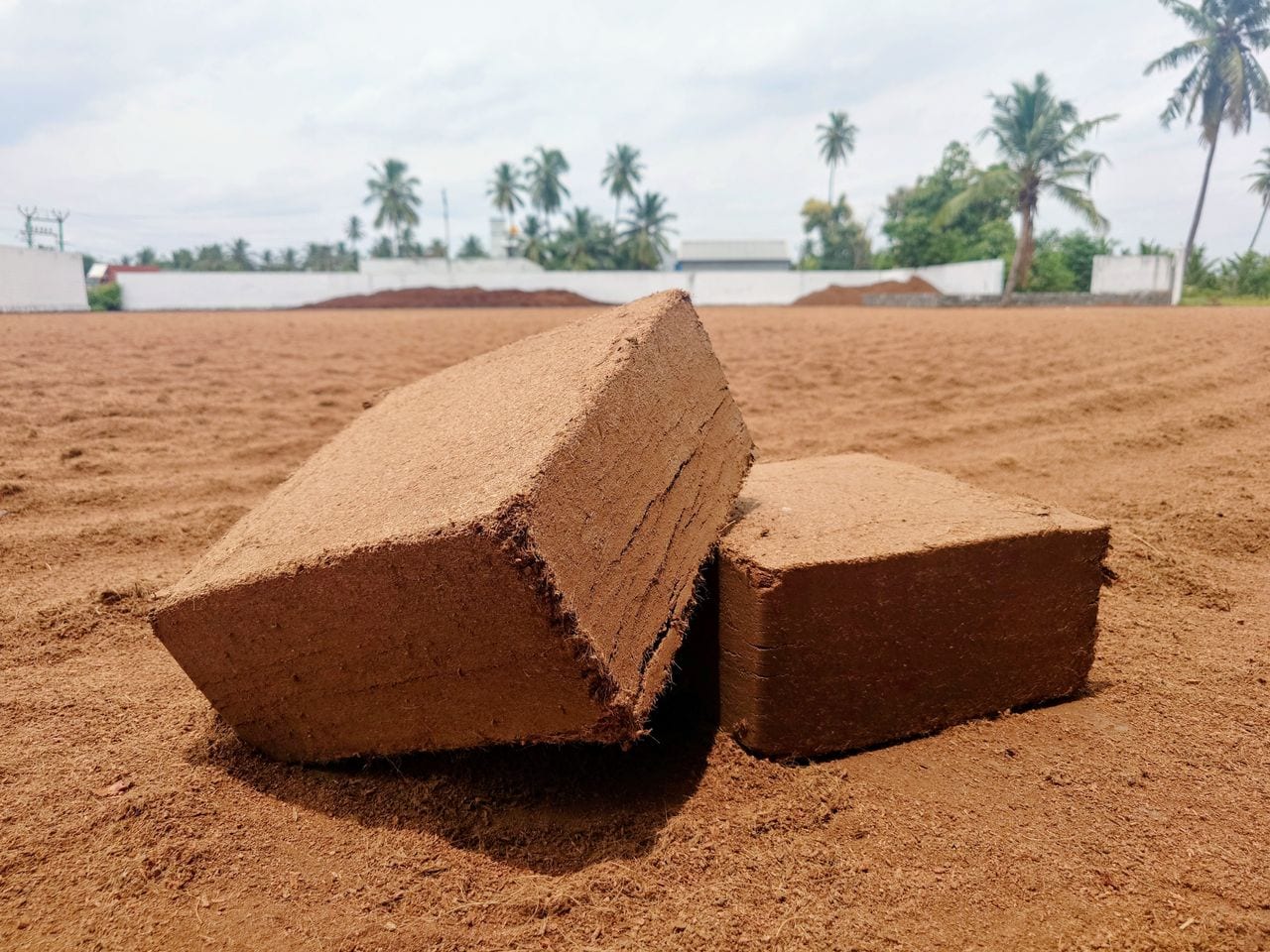
Briquettes and blocks hydrate on the bench, with no overnight pre-soak to schedule. Hydrate them exactly when you need them, morning, midday, or at sowing time.
Even
Moisture holds through the callus window
Coir holds moisture evenly, which helps keep callus-forming conditions steady without constant irrigation monitoring. Less intensive management on the propagation bench.
Propagation Type Guide
Key parameters per method.
Seed Germination
EC Target
Low native EC · no feed first 7 days
Drain %
15%
Fill 50–84 cell trays from hydrated briquette directly. Hold irrigation to wetting only, seeds need moisture, not water movement. No feed until first true leaf.
Cutting Propagation
EC Target
Low native EC · hold until callus forms
Drain %
10 – 15%
Keep the substrate evenly moist. Mist frequently. Do not push irrigation until roots emerge. Any water stress during callus formation delays rooting significantly.
Liner Production
EC Target
0.5 – 1.0 after establishment
Drain %
15 – 20%
Transplant into hydrated coir block for 4–8 week establishment. Coir's open structure allows clean intact root balls at transplant-out.
Activation Protocol
Hydrate. Test. Sow.
Briquettes and blocks hydrate on the bench. Check EC after hydration, then sow.
01
Hydrate
Pour clean water (EC ≤ 0.5) over the briquette or block and let it absorb fully. No heating needed. Break apart and aerate after full absorption, do not compact.
02
First feed
Hold nutrients for 5–7 days after germination or cutting strike. Washed, low-EC coir gives you control of first nutrition. Start feed at EC 0.5 and increase incrementally.
03
Transplant
Transplant when roots appear at drainage holes. Coir makes a clean, intact root ball, no root tearing at correct hydration. Minimal transplant stress and maximum carry-through at liner-out.
Agronomic Support
Substrate specification for your operation.
Share your crop, target EC, system format, and season length, and we'll specify the right substrate and provide technical support for your first grow.
Talk to our agronomy team
Substrate guidance matched to your crop, system format, and target EC window.
Recommended Substrates

Ready to trial coir for propagation?
Substrate specification for your nursery bench.
Tell us your propagation method, tray format, and crop, we'll recommend the right briquette or block grade and confirm the hydration steps.